Here is the trailer for the new Japanese low budget indie Bakabakance. The title roughly means stupid dance. Baka (stupid) is a great overused Japanese word. Apparently the movie's about a road trip a guy takes with his co-worker and the ex-girlfriend who left him for another guy. Read about it at Nippon Cinema.
And here's one with English subtitles for The Good The Bad and the Weird. I mentioned it earlier here.
More trailers here.
Saturday, June 14, 2008

Saturday, June 07, 2008
MORE REVENGE: CHOP SOCKEY VINDICATION
Kung fu film's wholesale use of vengeance as a plot device borders on self-parody. When the boom first went global in the early 70's vengeance was to wrong the evil doings of greedy oppressors. The Japanese were often targets, painted as the devilish scourge of modern China. Eventually films with higher production values, slightly more complex structures and less racially inspired themes would emerge, largely from the famed Shaw Brothers studios. Vengeance still ran rampant but style and choreography improved hand in hand. Directors like Liu Chia Liang, Chang Che and Chu Yuan defined the sensibilities of the kung fu film goldmine that came out of the 70's and 80's.
 The 36th Chamber of Shaolin (1978): This is the quintessential kung fu film. Its aboutness is the meaning of kung fu itself. The bare bones political plot was inspired by what would become a preferred storyline in the films of Chang Che and other kung fu period directors: the struggle of native Chinese rebelling against the evil Manchus that ruled over them during the Qing dynasty. The Manchu's kill young would be rebel San Te's father. San Te, on a vengeance fueled quest to depose the Manchu's, escapes to the Shaolin temple to learn martial arts. But the film concentrates on what it means to gain high martial skills and the ideal way those skills should be used. Vengeance is a given, but is superseded by greater principles. The idea of fighting for the good of society as a whole ends up taking precedence over individualistic motives and desires.
 5 Superfighters (1978): This enjoyable kung fu yarn is stripped down to its bare elements. An evil kung fu expert comes to town challenging anyone he deems to be of lesser skill. His mission, he claims, is to 'correct bad kung fu.' He beats the hell out of an elder teacher. The teacher's 3 young disciples each find another teacher and learn new techniques to teach the evil kung fu guy a lesson and serve retribution to their master. Minimizing the structures of an already formulaic genre renders 5 Superfighters a trope-driven comic book. Yet it also, believe it or not, offers one of the most existentialist kung fu movies ever made. Every character in this films exists by and for kung fu only. This of course allows for a lot of fun and interesting displays of martial arts. Some highlights include the female kung fu master and the exhibitions of monkey kung fu. The archetypical villain is excellent and defined completely by his pure, immoral, yet principled quest for 'perfect kung fu.'
 The 36th Chamber of Shaolin (1978): This is the quintessential kung fu film. Its aboutness is the meaning of kung fu itself. The bare bones political plot was inspired by what would become a preferred storyline in the films of Chang Che and other kung fu period directors: the struggle of native Chinese rebelling against the evil Manchus that ruled over them during the Qing dynasty. The Manchu's kill young would be rebel San Te's father. San Te, on a vengeance fueled quest to depose the Manchu's, escapes to the Shaolin temple to learn martial arts. But the film concentrates on what it means to gain high martial skills and the ideal way those skills should be used. Vengeance is a given, but is superseded by greater principles. The idea of fighting for the good of society as a whole ends up taking precedence over individualistic motives and desires.
 5 Superfighters (1978): This enjoyable kung fu yarn is stripped down to its bare elements. An evil kung fu expert comes to town challenging anyone he deems to be of lesser skill. His mission, he claims, is to 'correct bad kung fu.' He beats the hell out of an elder teacher. The teacher's 3 young disciples each find another teacher and learn new techniques to teach the evil kung fu guy a lesson and serve retribution to their master. Minimizing the structures of an already formulaic genre renders 5 Superfighters a trope-driven comic book. Yet it also, believe it or not, offers one of the most existentialist kung fu movies ever made. Every character in this films exists by and for kung fu only. This of course allows for a lot of fun and interesting displays of martial arts. Some highlights include the female kung fu master and the exhibitions of monkey kung fu. The archetypical villain is excellent and defined completely by his pure, immoral, yet principled quest for 'perfect kung fu.'
Monday, May 26, 2008
AN EYE FOR AN EYE: REVENGE FILMS
Vengeance is a primal instinct as well as a philosophically rich source of visceral drama. Revenge works in so many varied milieus, from kung fu and spaghetti westerns to corporate espionage and so on. Part of what makes revenge so fascinating is that it is ultimately futile; a vicious circle that may lead to catharsis, but does not necessarily bring about redemption or justice. Nevertheless, retribution fuels countless thrills throughout cinema. Below is the start of a list of various revenge movies. Think of this as a potential syllabus for a class on revenge cinema or maybe worthy of discussion in a book. Please suggest some of your favorite revenge movies.
Rolling Thunder (1977): This tough film slowly boils over in outrage towards suffering, injustice and the American establishment in the Vietnam era. William Devane plays Major Rane, a returned POW who is honored as a hero by his hometown. However, soon after his homecoming Rane faces horrific tragedy in the face of a gang of greedy lowlifes. Paul Schrader's hardboiled script and John Flyn's taut direction translate angst and anomie into visceral mayhem. Tis a pity there's not an official U.S. DVD available.
 Massacre at Central High (1976): This very strange low budget exploitation exercise concerns the dire consequences of bullying in high school. The universe of the film is self contained and detached; adults are never seen for the most part, while the cast appear to be more in their early 20's then actual teenagers. This isolation adds a stirring sense of claustrophobia. The whole production is off kilter and stilted in a way that makes it effectively disturbing. Director Renee Daalder was a protege of Russ Meyer and through Meyer came to work with The Sex Pistols. Daalder designed the "My Way" sequence of The Great Rock And Roll Swindle. Massacre At Central High is definitely a punk rock movie, if not musically both in spirit and aesthetic.
The Bad Sleep Well (1960) is Akira Kurosawa's take on Hamlet. Set in contemporary Japan with a backdrop of corporate intrigue, the story of a man's climb up the executive ladder unravels a quest for retribution. The links to Hamlet would seem to be patricide, conspiracy, introspection and doom. Kurosawa's always complex construction incorporates some heady social commentary. Apparently some inspiration came from headlines contemporaneous with the production. Kurosawa hits an intensely stirring, bleak tone. Mifune is excellent as always in the vengeance seeking Hamlet role. Kurosawa's sensitivity to human feelings raises complex moral issues. By weaving a tale that transcends the usual physical modes of revenge Kurosawa also defies expectations. The result is a philosophically provocative and cinematically striking thriller.
 Do you think director Enzo G. Castellari saw the above Kurosawa film before he made the cheekily inspired spaghetti western Johnny Hamlet (1968)? Apparently it was Sergio Corbucci's idea but he was to busy to realize it into fruition. Therefore Corbucci bequeathed the project onto Castellari. Johnny comes home after fighting in the civil war to find that his father was murdered and his mother married his Uncle Claudio. This is an exploitation film so it is very much about the physical modes of revenge. But so much of the source material is intact, including Hamlet's tortured soul, and, if I remember correctly, he does get visited by his father's ghost. There's an added Gothic tone to the production, wild colors and the like, plus some rowdy fist fights thrown in for macho good measure. The trailer is pretty psychedelic.
 Probably the most influential spaghetti western with a revenge plot-line is the Leone masterpiece Once Upon a Time in the West (1968). Haunting theme music enforces the mythical mystique of Charles Bronson's vengeance seeking loner known as 'Harmonica.' And of course Bronson went on to become the icon of revenge for his star turn in the Death Wish films. He publicly denounced the vigilantism of his Death Wish character in the wake of the Bernhard Goetz incident. Death wish director Michael Winner had worked with Bronson 2 years earlier on the revenge tinged action film The Mechanic (1972). The laconic hitman Bronson plays helped seal his on-screen persona of a no-nonsense anti-heroic badass. So the question arises: What is the most identifiable face of revenge floating in our collective consciousness? From the Bronson perspective it would seem to be someone at piece with themselves; someone who understands the meaning of restraint. But circumstances beyond their control exhaust that restraint. In the Mechanic the concept of vengeance is played out more existentially. For Bronson and Jan Michael Vincent's character revenge becomes a game of cat and mouse that defines their lives. Winning the game somehow supersedes the moral and emotional impetus de riguer for the path of vindication.
 Perhaps one of the most iconic and beautiful faces of vengeance belongs to the strikingly stoic visage of Kaji Meiko. After establishing herself as an action star in films like Wandering Ginza Butterfly and Nikkatsu's juvenile delinquent Stray Cat Rock series, Ms. Kaji starred in several influential revenge films during the 70's. Lady Snowblood (1973) is an ultra-violent samurai action tale based on an even more violent manga (and was the template for Kill Bill). Perhaps even more impressive (and also based on a manga - Japan has really cultivated comic book ultra-violence) is the Female Convict Scorpion series. These breakthrough women in prison films follow the blood-soaked path of Nami, a woman wronged by the evil and greed of others. They feature some of the wildest, over the top set pieces ever.
Many more coming soon...
Rolling Thunder (1977): This tough film slowly boils over in outrage towards
 suffering, injustice and the American establishment in the Vietnam era. William Devane plays Major Rane, a returned POW who is honored as a hero by his hometown. However, soon after his homecoming Rane faces horrific tragedy in the face of a gang of greedy lowlifes. Paul Schrader's hardboiled script and John Flyn's taut direction translate angst and anomie into visceral mayhem. Tis a pity there's not an official U.S. DVD available.
 Massacre at Central High (1976): This very strange low budget exploitation exercise concerns the dire consequences of bullying in high school. The universe of the film is self contained and detached; adults are never seen for the most part, while the cast appear to be more in their early 20's then actual teenagers. This isolation adds a stirring sense of claustrophobia. The whole production is off kilter and stilted in a way that makes it effectively disturbing. Director Renee Daalder was a protege of Russ Meyer and through Meyer came to work with The Sex Pistols. Daalder designed the "My Way" sequence of The Great Rock And Roll Swindle. Massacre At Central High is definitely a punk rock movie, if not musically both in spirit and aesthetic.
The Bad Sleep Well (1960) is Akira Kurosawa's take on Hamlet. Set in contemporary Japan
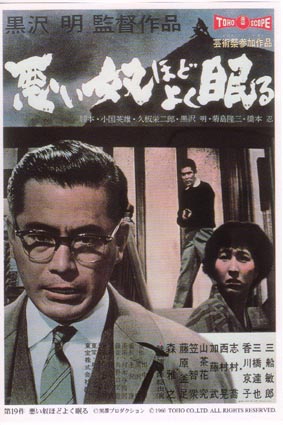 with a backdrop of corporate intrigue, the story of a man's climb up the executive ladder unravels a quest for retribution. The links to Hamlet would seem to be patricide, conspiracy, introspection and doom. Kurosawa's always complex construction incorporates some heady social commentary. Apparently some inspiration came from headlines contemporaneous with the production. Kurosawa hits an intensely stirring, bleak tone. Mifune is excellent as always in the vengeance seeking Hamlet role. Kurosawa's sensitivity to human feelings raises complex moral issues. By weaving a tale that transcends the usual physical modes of revenge Kurosawa also defies expectations. The result is a philosophically provocative and cinematically striking thriller.
 Do you think director Enzo G. Castellari saw the above Kurosawa film before he made the cheekily inspired spaghetti western Johnny Hamlet (1968)? Apparently it was Sergio Corbucci's idea but he was to busy to realize it into fruition. Therefore Corbucci bequeathed the project onto Castellari. Johnny comes home after fighting in the civil war to find that his father was murdered and his mother married his Uncle Claudio. This is an exploitation film so it is very much about the physical modes of revenge. But so much of the source material is intact, including Hamlet's tortured soul, and, if I remember correctly, he does get visited by his father's ghost. There's an added Gothic tone to the production, wild colors and the like, plus some rowdy fist fights thrown in for macho good measure. The trailer is pretty psychedelic.
 Probably the most influential spaghetti western with a revenge plot-line is the Leone masterpiece Once Upon a Time in the West (1968). Haunting theme music enforces the mythical mystique of Charles Bronson's vengeance seeking loner known as 'Harmonica.' And of course Bronson went on to become the icon of revenge for his star turn in the Death Wish films. He publicly denounced the vigilantism of his Death Wish character in the wake of the Bernhard Goetz incident. Death wish director Michael Winner had worked with Bronson 2 years earlier on the revenge tinged action film The Mechanic (1972). The laconic hitman Bronson plays helped seal his on-screen persona of a no-nonsense anti-heroic badass. So the question arises: What is the most identifiable face of revenge floating in our collective consciousness? From the Bronson perspective it would seem to be someone at piece with themselves; someone who understands the meaning of restraint. But circumstances beyond their control exhaust that restraint. In the Mechanic the concept of vengeance is played out more existentially. For Bronson and Jan Michael Vincent's character revenge becomes a game of cat and mouse that defines their lives. Winning the game somehow supersedes the moral and emotional impetus de riguer for the path of vindication.
 Perhaps one of the most iconic and beautiful faces of vengeance belongs to the strikingly stoic visage of Kaji Meiko. After establishing herself as an action star in films like Wandering Ginza Butterfly and Nikkatsu's juvenile delinquent Stray Cat Rock series, Ms. Kaji starred in several influential revenge films during the 70's. Lady Snowblood (1973) is an ultra-violent samurai action tale based on an even more violent manga (and was the template for Kill Bill). Perhaps even more impressive (and also based on a manga - Japan has really cultivated comic book ultra-violence) is the Female Convict Scorpion series. These breakthrough women in prison films follow the blood-soaked path of Nami, a woman wronged by the evil and greed of others. They feature some of the wildest, over the top set pieces ever.
Many more coming soon...
Sunday, May 18, 2008
GOLDEN NIGHTS
Friday night out on the town. Well, Williamsburg that is, home of the affected hipster. Dean and I went to Snacky. Jimbo from Uncle Morty's Dub Shack was sitting in the same seat as last time I was there. Maybe he has a share in the place. They were showing the Jackie Chan classic Young Master. We had the Zatoichi special: $4 sake shot with a Tsingtao chaser. Dean, who is the mayor of coolsville ran into about 5 people he knew while we drank and chomped down on fried rice and shoyu ramen. Then we made our way down the street to Trash Bar. We got there just in time for the Imaginary Icons, Tom and Ted's band (I don't know the other two guys). They are reviving a genre that barely ever existed: neo British post punk. Think heavy influences of Wire, Swell Maps, etc. Maybe Mission of Burma was influenced by some of that stuff or had similar sensibilities but they remained fairly original. That was the thing with the first wave of post punk bands: the originality in an era of stale music. By stripping things down those early British bands allowed other complexities to emerge. Imaginary Icons are pretty good, and have interesting parts but I'm still waiting for that one hit song. It does seem like their almost putting on English accents. Maybe it's the familiar phrasing of their vocal lines and arrangements, I'm not sure. The Big Boys "Heartbeat" popped up on my ipod the following day and I realized that they were also playing with weird staccato rhythms while mixing musical genres, though their influences seemed more disparate, namely punk rock and funk/r & b. Next up was The Golden Boys from Austin (pictured above). Don't know how to describe them exactly, somewhere between underground rock, country and a little bit of singer songwriter in a very disheveled sense (that's a good thing). They had a great, chaotic energy but managed to keep everything together despite the lead guitar struggling with his strap through the first two numbers. They had a keyboard player with a curly mustache and all four of the upright musicians assaulted the front of the stage in a happy melee of flailing limbs and twangy sounds while the drummer slammed hard and thrilled the audience at one point with a one armed passage, brandishing a beer in the other hand. I left early so I missed The Spider Bags, who Dean said were great, and the self-proclaimed country rock of Puddin' Tang. So much for me and the scene.
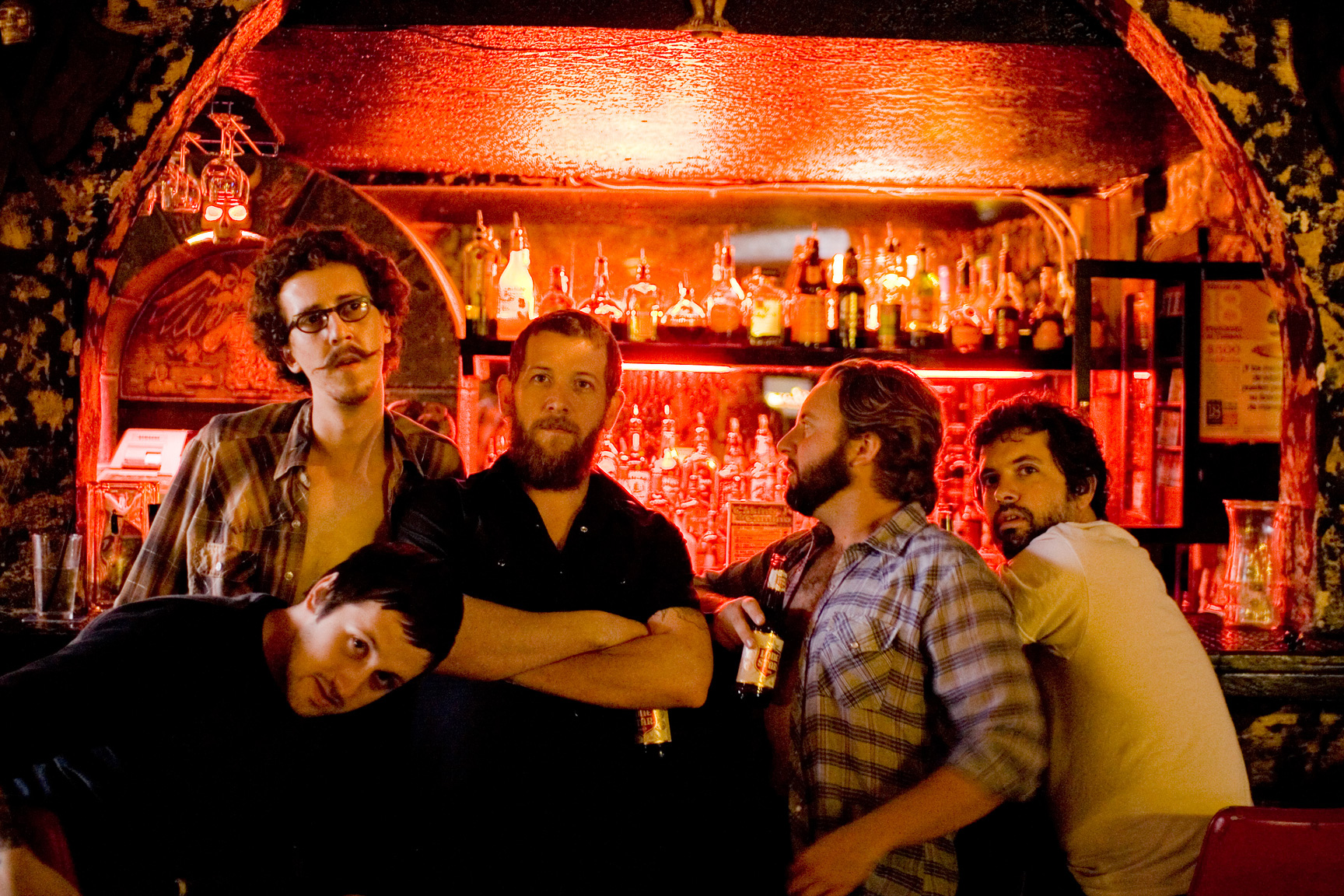 Williamsburg that is, home of the affected hipster. Dean and I went to Snacky. Jimbo from Uncle Morty's Dub Shack was sitting in the same seat as last time I was there. Maybe he has a share in the place. They were showing the Jackie Chan classic Young Master. We had the Zatoichi special: $4 sake shot with a Tsingtao chaser. Dean, who is the mayor of coolsville ran into about 5 people he knew while we drank and chomped down on fried rice and shoyu ramen. Then we made our way down the street to Trash Bar. We got there just in time for the Imaginary Icons, Tom and Ted's band (I don't know the other two guys). They are reviving a genre that barely ever existed: neo British post punk. Think heavy influences of Wire, Swell Maps, etc. Maybe Mission of Burma was influenced by some of that stuff or had similar sensibilities but they remained fairly original. That was the thing with the first wave of post punk bands: the originality in an era of stale music. By stripping things down those early British bands allowed other complexities to emerge. Imaginary Icons are pretty good, and have interesting parts but I'm still waiting for that one hit song. It does seem like their almost putting on English accents. Maybe it's the familiar phrasing of their vocal lines and arrangements, I'm not sure. The Big Boys "Heartbeat" popped up on my ipod the following day and I realized that they were also playing with weird staccato rhythms while mixing musical genres, though their influences seemed more disparate, namely punk rock and funk/r & b. Next up was The Golden Boys from Austin (pictured above). Don't know how to describe them exactly, somewhere between underground rock, country and a little bit of singer songwriter in a very disheveled sense (that's a good thing). They had a great, chaotic energy but managed to keep everything together despite the lead guitar struggling with his strap through the first two numbers. They had a keyboard player with a curly mustache and all four of the upright musicians assaulted the front of the stage in a happy melee of flailing limbs and twangy sounds while the drummer slammed hard and thrilled the audience at one point with a one armed passage, brandishing a beer in the other hand. I left early so I missed The Spider Bags, who Dean said were great, and the self-proclaimed country rock of Puddin' Tang. So much for me and the scene.
Thursday, May 15, 2008
X VERSUS ZERO
 When I first heard about this brand new kaiju Monster X Strikes Back I immediately thought of one of my favorite kaiju movies Invasion of the Astro Monster (1965). In Astro Monster a Japanese and an American astronaut travel to Planet X. The Planet X-ians (caled Xiliens) explain how they want to pit some earth monsters against their own planet's Monster Zero. The space scenes, like the underground chasm where the Planet X folks live, are colorfully psychedelic and totally kitsch mod cool. The monsters are pretty awesome too. Monster Zero is that three headed beast also known as King Gidorah and he ends up fighting Godzilla and Rodan (thus the Japanese title that translates to Kaiju Big Battle or the great monster war). Monster X Strikes Back is directed by Minoru Kawasaki, the man behind Calamari Wrestler and Executive Koala. Wait there's more: the subtitle is "Attack the G Summit" and it also features none other than Beat Takeshi. Monster X's Japanese name is Girara, apparently a 3rd rate monster who was in The X From Outer Space (1967). Guirara looks like a mutant bird crossed with a robot and I imagine was to Kaiju what Sartana was to spaghetti westerns. Hey I love that first Sartana movie but by the time he came along to the genre with his James Bondian gadgetry and other anti-hero cliches it was bordering on self-parody. No wonder when Leone and friends heard the title If you Meet Sartana Pray for your Death they mockingly retorted "If you see Sartana tell him he's an asshole."
Wednesday, May 07, 2008
SEX, VIOLENCE AND WEIRDNESS!
 There appears to be exponential irony rampant within the current crop of neo- exploitation films (post-deuce). This is no more evident than in a few recent self-referentially tongue in cheek pre-fab cult films from Asia.
Machine Girl grabbed a lot of attention when its trailer hit Youtube. Did director Noboru Iguchi willfully rip off Rodriguez' potluck pastiche offered up in the Planet Terror half of Grindhouse? Or perhaps the deadly disfigured badass hottie with a gun fever dream has been floating in the ether since the days when They Call Her One Eye enjoyed extended runs in Times Square? This looks like an homage cum send-up of everything from Sukeban Deka to Master of the Flying Guillotine and a barrel of mindless monkey fun at that. Tokyo Shock is releasing the DVD in June. Too bad these sort of films don't get wide theatrical releases anymore. I still have fond memories of seeing a midnight show of Demons.
The team behind Machine Girl already have a new gross-out action epic, Tokyo Gore Police. It's directed by Yoshihiro Nishimura, the effects man from Machine Girl , and stars Eihi Shiina,
 the sexy sadist from Audition.
Sex as a mantle for ultra-violence can get exhaustive so it's a breath of fresh air to hear about a new neo-spaghetti western by way of Korea. Kim Ji Woon, the director of the excellent modern noir/Hong Kong action homage A Bittersweet Life, the creepy artsy horror Tale of Two Sisters and the wacky cult wrestling comedy The Foul King is behind this one: The Good, The Bad and The Weird!

It takes place in 1930's Manchuria and involves bandits, militants, and a treasure map. Heartthrob Lee Byung Hun from A Bittersweet Life plays the good, Jung Woo Sung from Musa plays the bad, and that funny pudgy underdog from The Host Song Kang Ho plays the weird.
Friday, May 02, 2008
NEW JAPANESE BLIND SWORDSWOMAN
 Ichi is part of Sochiku Studio's latest line-up, one of the many films they'll be marketing at Cannes. It's a re-working of the Zatoichi formula, only this time the titular hero is a traveling woman shamisen player. Of course she has a sword hidden inside her walking stick. Sounds cool, but judging by recent Japanese television-inflected big studio productions - perhaps the recent Sanjuro remake starring Yuji Oda of Bayside Shakedown fame is one indication - it might not be that promising. Oh yeah, there's also a recent remake of Kurosawa's Hidden Fortress - yes, the film that provided the plot template for the first Star Wars. Anyhow, Ichi is directed by Fumihiko Sori (Ping Pong, Vexille) and stars an idol , the sexy Haruka Ayase. Who doesn't like sexy badasses and the trailer looks slightly intriguing, but this chick doesn't seem to have that innate stoic demeanor of say Kaji Meiko or Shibasaki Ko (who has been called the Kaji Meiko of her generation). Shibasaki recently starred in the Steven Chow
 produced Shaolin Girl. I guess there she sheds the scary stoic badass skin and reveals a more athletic, comedic side.
This is not the first Japanese blind swordswoman film.
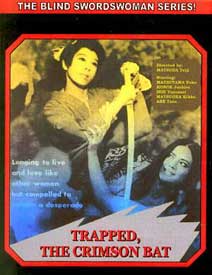
There was a succesful Shochiku series called the Crimson Bat, starring Yoko Matsuyama, based on a manga by her husband Teruo Tanashita. The original zatoichi is a jidai-geki (period piece) of the chanbara (sword swinging action) genre, though technicaly, because zatoichi is essentially a roving gambler, the films qualify as yakuza eiga. The Crimson Bat gains her sword prowess under the tutelage of a ronin so I suppose it's more samurai than yakuza.According to the synopsis, the heroine in Ichi is at odds with the yakuza, perhaps not unlike the Beat Takeshi Zatoichi.
Monday, April 14, 2008
SHINE SOME LIGHT ON THIS
 I'm not rushing to the Ziegfeld to see this new Stones concert movie even if the newest song they played is from Tattoo You and the repertoire goes as far back as 1965's "I'm Free." I recently had the pleasure, however, to see a truly golden moment in their career, the 1973 behind the scenes concert movie Cocksucker Blues, directed by genius photographer and beat collaborator Robert Frank. The Stones themselves were not happy with Frank's candid, elliptical snapshot and forbade him to show the film. Ensuing legal action only granted Frank the right to screen the film five times a year and he has to be present. That doesn't stop copies getting around to Stones fans of course. Frank manges to capture the ennui that comes with being 'the world's greatest rock and roll band' as well as sensational moments such as groupies and roadies getting wild on a plane, folks shooting up, nodding off, Bianca Jagger and Tina Turner domineering the frame, and Mick and Keith hanging out in a juke joint, the one moment they seem slightly happy. Speaking of happy, there's a great sequence where Stevie Wonder plays "Uptight" with the Stones joining in that segues to another scene where the band listens to the single of "Happy" for the first time, which then segues into them playing "Happy" live and then back to the room again. Really cool.
Saturday, April 12, 2008
GENTLEMAN KILLER
 Anthony Steffen stars in this third rate spaghetti western from 1967, unearthed from Wild East Productions. Of course third rate in an exploitation film is not necessarily a bad thing. On the contrary this entry in the 60's Euro-Western boom is extra gritty and mean-spirited. It's derivative in a way that satisfies those genre trope obsessions: lots of action, sleazy moments, amorality and fetishization of the genre itself that are easily and happilly recognizable. This is perhaps most evident in the appropriately rustic production design. The look of the Mexican bandits is particularly effective here, even if the melodramatic elements are played up to a screaming pitch, with all the baddies chewing scenery as they wreak havoc with sinister laughter worthy of Ming the Merciless (or at least as evil as Dr. Klahn from A Fistful of Yen). Eduardo Fajardo stands out as the stereotypically villainous Mexican, Colonel Ferreres. Ferreres gets a great kick out of chiding one of his henchmen, calling him 'muchachita.' Later said henchmen retorts back calling Ferreres Colonel de mierda. The plot is a throwaway: Dastardly Mexican 'soldiers' are dominating a small border town. They are after a shipment of gold or some such treasure. A mysterious gambler, who also happens to be a gentleman, comes to town and messes up their plans. Here's the key point that makes the film thrid rate: the hero is completely bad ass and on the side of the law AND sympathetic to the victims of cruelty. The great conceit of Leone's protagonists was that they were anti-heroes who seemed to care less about feelings. The so called man with no name as well as Mortimer, maintained a super cool-demeanor and were more interested in personal gain or revenge than simply human interest. A superman, one-dimensional do-gooder, such as Gentleman Killer renders the action more comic book-like. Nevertheless it's an enjoyable ride. There are moments reminiscent of the great Django - GK helps and is rescued by a prostitute, he swings around balconies and so forth, and in the third act he is the victim of some crippling torture from the baddies. Alex Cox spoke to me about the whole traumatized prostitute/hero angle, which is straight out of Django. But while in Django the hero is practically maimed, here they borrow a plot device from another great spaghetti, Requiescant: he gets blind drunk. The Mexicans force feed him 2 1/2 bottles of booze in about 30 seconds time. Still, this doesn't prevent him from escaping in an almost acrobatic fashion. I did like the way the film ended, which was a fun twist on a cliche.
Monday, April 07, 2008
A SAMURAI GLIMPSE INTO THE INFINITE ABYSS
 Ego's comment on the Dynamite Openings and Knockout Endings post served as a reminder of Sword of Doom, one of the greatest samurai movies ever, which also happens to have an incredible, knockout ending. It is probably the best version of the oft-filmed novel (originally serialized in the newspaper) Dai-Bosatsu Toge (The Great Buddha Pass), about a ronin with daunting, superhuman sword skills who also happens to be evil incarnate. Mr. Evil Badass is not without enough of a moral compass to know just how rotten he is however, allowing director Kihachi Okamoto to explore severe existential dread. Tatsuya Nakadai is incredible as the antihero. This summer there will be a Nakadai retrospective at Japan Society and Film Forum at which Nakadai will make an appearance.
Thursday, April 03, 2008
COCOCOMA

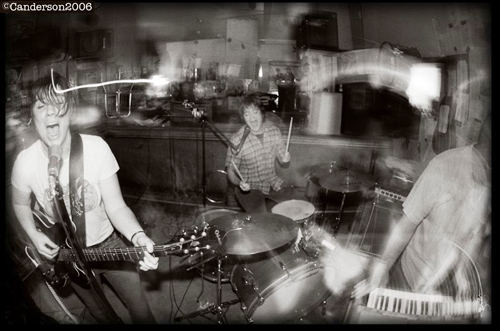
Is that an esoteric band name or am I just out of the loop? Is it one of those tribal chants assimilated into New Orleans r & b or is it some small hamlet in Long Island or Florida? Cococoma is a great contemporary garage punk band from Chicago. They manage to channel those great 60's punk sounds without being simply neo/revival, but instead blend a pastiche of sounds with enough pop sensibility and punk attack to keep it fresh and exciting. Granted that pastiche comes from a specific niche. I hear resemblances of sounds in the vocals and the parts of songs, references remain on the tip of your tongue as you feel like it's comfortably familiar but fresh at the same time. The band was started by a husband and wife, the former on drums and vox and the latter slashing furious on guitar. And for added measure they've got a great keyboard player who manages to integrate both rhytmic dynamics as well as a few slightly melodic twists as well. Check out the cool composure of 'Premonition,' which retains raw charm yet boasts clever structure and catchy hooks. They have some raw singles and an excellent album on Goner Records.
Monday, March 31, 2008
HOODLUM SOLDIER or SADISM MEETS ITS MATCH
Did director Yasuzo Masumura have a personal interest in s & m or did he simply find it metaphorical for the Japanese psyche? Moju (Blind Beast), based on an Edogawa Rampo story, was a cinematic treatise on sado-masochistic desire and its ramifications. Heitai Yakuza (Hoodlum Soldier) (1965) examines Japanese social hierarchy and its s & m leanings through a story of a yakuza serving in the Japanese army, stationed in Manchuria. The yakuza (played by Zatoichi himself, Katsu Shintaro) ends up being a punching bag for almost every senior officer, all who seem to have some kind of chip on their soldier. Because of rank he's not allowed to hit back. But you know that won't last for too long. It must be tough growing up in a country where you always have to answer to someone; where concepts of seniority and superiority are so ingrained in everyday life, from family to school to the workplace and so on, that the subconcious is built for abuse or to dish it out if the chance arises. The screenplay allows Masumura to question this behavior, seemingly di rigeur for the society as a whole (imagine CEOs verbally lambasting sallarymen and senpai - kohai ijime). A subversive voice emerges through the relationship between the yakuza and an idealistic conscientious objector officer that befriends and protects him. There are Lots of beatings and fights, because the yakuza naturally is a real scrapper and takes on several men at the same time. Quite compelling and it spawned several sequels. We can thank Ian Buruma for selecting it for Asia Society's yakuza film series, which you can read more about in my article here. The whole idea of getting beaten on and then fighting back reminds me of that 70's kung fu trailer that had the tag line "he takes a licking and keeps on kicking." And I think the voice over artist on that was Adolph Caeser.

Wednesday, March 12, 2008
DYNAMITE OPENINGS KNOCKOUT ENDINGS
The opening and ending of a film are arguably the most crucial moments. They contain the power to express the entirety of the story in a single sequence. There is also a potential for poetry if they merge together symmetrically or harmoniously. Here are some prime examples of great openings:
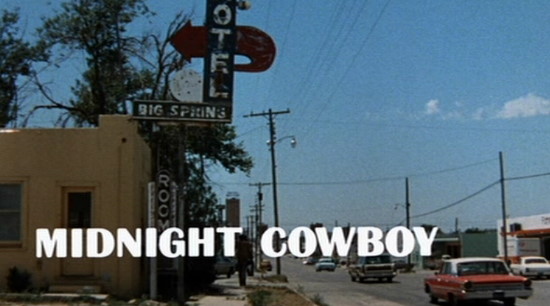
Midnight Cowboy A nice complex mix of sound and visual design. The opening becomes an intricate visual metaphor for the aboutness of the movie, summed up in about 10 seconds. The sounds of a cowboy & Indians shoot em up give way to the reality of a lonely child amusing himself in an abandoned drive-in.

The Wild Angels Another succinct visual metaphor, which features a kid on a big wheel imprisoned by a white picket fence, while the appearance of motorcycle rebel Peter Fonda signifies the threat of 'otherness.'


Enter the Dragon Hey, it opens with Bruce Lee cleaning up the mat with Sammo Hung. Ok, Sammo is fat and Bruce is buff but still, Sammo can flip and kick, they're outdoors surrounded by kung fu monks, the music is cool, Bruce is bad-ass - visceral action in its purest form.

Now, without giving too much a way, let's talk about some terrific endings:
The 400 Blows This pretty much sums up pangs of adolescence and juvenile angst to a tee. Nice use of the freeze frame. Sends quivers up my spine every time as Antoine finds himself at the edge of the earth.
Stroszek This is an incredibly powerful blend of documentary and narrative. The finale captures Americana in its most crude and pure form; a moment full of truth, if you consider the New York Chinatown arcade, which for years featured a dancing chicken.
The Harder They Come The visual storytelling in this antihero ballad triumphs over its low budget. All that has passed before in the story of Ivan the outlaw reggae singer comes together in the devastating climax as he asks for one man to come out and draw, a la the Italian western Django.

Two Lane Blacktop Possibly the greatest ending of all. It's metaphoric and incredibly powerful; formally complex and simple at the same time. Sheer genius.

Please suggest more examples...
Now I'm thinking of the greatest opening sequence ever. What is it? First one right gets a prize.
Midnight Cowboy A nice complex mix of sound and visual design. The opening becomes an intricate visual metaphor for the aboutness of the movie, summed up in about 10 seconds. The sounds of a cowboy & Indians shoot em up give way to the reality of a lonely child amusing himself in an abandoned drive-in.
The Wild Angels Another succinct visual metaphor, which features a kid on a big wheel imprisoned by a white picket fence, while the appearance of motorcycle rebel Peter Fonda signifies the threat of 'otherness.'

Enter the Dragon Hey, it opens with Bruce Lee cleaning up the mat with Sammo Hung. Ok, Sammo is fat and Bruce is buff but still, Sammo can flip and kick, they're outdoors surrounded by kung fu monks, the music is cool, Bruce is bad-ass - visceral action in its purest form.

Now, without giving too much a way, let's talk about some terrific endings:
The 400 Blows This pretty much sums up pangs of adolescence and juvenile angst to a tee. Nice use of the freeze frame. Sends quivers up my spine every time as Antoine finds himself at the edge of the earth.

Stroszek This is an incredibly powerful blend of documentary and narrative. The finale captures Americana in its most crude and pure form; a moment full of truth, if you consider the New York Chinatown arcade, which for years featured a dancing chicken.
The Harder They Come The visual storytelling in this antihero ballad triumphs over its low budget. All that has passed before in the story of Ivan the outlaw reggae singer comes together in the devastating climax as he asks for one man to come out and draw, a la the Italian western Django.

Two Lane Blacktop Possibly the greatest ending of all. It's metaphoric and incredibly powerful; formally complex and simple at the same time. Sheer genius.

Please suggest more examples...
Now I'm thinking of the greatest opening sequence ever. What is it? First one right gets a prize.
Friday, March 07, 2008
2 manly men, 1 geisha, lots of brooding and a bloody finish

Asia Society kicked off their yakuza film series, Gamblers, Gangsters and other Anti-heroes, with Tomu Uchida's 1968 version of Koyo Ozaki's oft filmed novel Jinsei Gekijo or Theatre of Life. The complete title of this version is Jinsei Gekijo: Hishakaku to Kiratsune - those are the names of the two protagonists at the end, thus the English translated title of A Tale of Two Yakuza. Series curator Ian Buruma gave an informative introduction, explaining how this was an example of the classical ninkyo yakuza films that were popular in the 60's. He mentioned discovering these films while living in Japan in the 70's and sometimes attending all night yakuza movie marathons. He also related how even the sanctuary seeking audience members who had dozed off would awake at every predictable climactic finale to urge on stars like Ken Takakura. One interesting word of encouragement he said was 'shine' (pronounced 'she nay') or 'die.' These cries weren't fueled by pure blood lust, but since the hero's death was inevitable they wanted him to die beautifully, as Mr. Buruma explained.
The movie is well constructed with meticulous plotting and structural devices, though a little bogged down dramatically. The majority of time is spent on a deliberately paced love triangle. Thankfully there's a stylish explosion of violent action at the end. This is metaphoric and cathartic for the emotional turmoil brought upon the characters by the giri ninjo dilema. Uchida frames interestingly enough on this sound stage production, adding a dash of theatrical and emotional vibrancy while remaining comfortably inside the formula. He also brings out strong performances from the all star cast, which included yakuza film icons Ken Takakura and Koji Tsuruta in the leads. Junko Fuji, who would go on to her own yakuza star turn in the Red Peony series, plays the geisha of their affections.
Monday, March 03, 2008
Watch out for that fork Lee!

Film Forum is giving this Richard Fleischer b-grade, color heist film, Violent Saturday a week run. Most of the time is spent on suburban soap opera, but all of it with an element of perversion lying beneath a happy Americana exterior. The nebbish bank manager is a peeping tom. When he finally confesses to the hot nurse who he's been spying on while she undresses, she flippantly laughs it off and says with a smile, 'we both learned something. From now on I'll pull down the window shade' . Lee Marvin plays one of the hold-up men and is creepy and sinister with his jittery behavior and obsessive use of a nasal inhaler. J. Carol Naish is another good villainous show-stealer who gets a great line when they rob the bank. He give a meddlesome little kid some candy and says 'put that in your kisser and suck on it.' Victor Mature is likable enough as the near flawless pedestrian hero. In a way this reminded me of Fritz Lang's Big Heat, which also features Lee Marvin - this time as a baddie who finds a sadistic use for hot coffee. The similarities are the balance of cornball Americana background and simmering angst and perversion. Neither film is a total success but each have their moments. And boy does Ernest Borgnine look well-cast as an Amish farmer. Fleishcer directs competently and predictably. Establishing shot, shot/reverse shot, pan in and pan out to emphasize the melodrama, etc. and not too much hysteria from the actors. Great title though. It will go in my festival of provocative titles, though maybe they should have saved this moniker for a more feisty heist film, like Charley Varrick.
The return of Walker

I interviewed Alex Cox on Thursday, 2/28/08. He was very gracious as we talked a lot about spaghetti westerns and the like. He was in town for Film Scoiety of Lincoln Center's Film Comment selects series. The closing night featured a screening of his 1987 political allegory Walker, his latest microfeature Searchers 2.0, and q & a with Alex and also Walker screenwriter Rudy Wurlitzer. Walker, which was pretty much buried on its initial theatrical release by Universal, has had something of a comeuppance with its recent Criterion DVD. It's a pretty anarchic film with Alex's loony sense of humor underlining the absurdity of the subject matter - imperialism, colonialism, and the random violence that ensues therein. There are some anachronisms thrown in for good measure too.
Tuesday, February 26, 2008
Attack of the rock and roll polar bear?
 The Shemps are playing this extravaganza and then one more show after that and POOF! We become a new band. Same members, different group. Weird, huh? So goes the wacky antics of rock and roll. I'm excited to play with my old pals The Candy Snatchers. They're named after an obscure 70's exploitation film and have often been called the most dangerous band alive. In their heyday sets included breaking glass, flying fish, nudity and full throttle, balls out punk rock and roll. They've just recorded a new album and what I've heard so far is awesome, very Stooges inspired.
Candy Snatchers video here.
The Shemps live video here.
Saturday, February 23, 2008
It's the OCD
List of movies seen in 2008 (in no particular order, and not including repeat viewings)
- Gangster V.I.P.
- Robinson's Crusoe
- Import Export
- Betelnut Beauty
- Kuro Neko
- Woman on the Beach
- 4 Months 3 Weeks 2 Days
- Flash Point
- Power of Kangwon Province
- The Silence Before Bach
- Sad Vacation
- Orochi
- Red Handkerchief
- Catch Us if you Can
- Quai des Orfevres
- Searchers 2.0
- Violent Saturday
- Withnail and I
- Jinsei Gekijo: Hishakaku to Kiratsune (A Tale of Two Yakuza)
- Lives of Others
- Plains Wanderer
- Hanyeo (The Housemaid)
- Mr. Cinema
- Dog Days
- Death Proof
- Planet Terror
- Heitai Yakuza (Hoodlum Soldier )
- Cocksucker Blues
- La Ley de Herodes (Herod's Law)
- Hula Girls
- Wakeful Nights
- Jar City
- Ballast
- Xing Xing, Yue Liang, Tai Yang (Sun, Moon and Star)
- Gentleman Killer
- The Mad Fox
- Battle in Heaven
- Fugitive from the Past
- Bloody Spear at Mount Fuji
- Tokyo Chorus
- Divergence
- Green Fish
- I Was Born But...
- Passing Fancy
- Secret Sunshine
- Oasis
- The Man Who Left His Will on Film
- Roughneck (Arakure)
- Fighter
- Let the Right One In
- Speed Racer
- Eye in the Sky
- Accuracy of Death
- A Gentle Breeze in the Village
- Adrift in Tokyo
- Fine, Totally Fine
- Dainipponjin
- Mourning Forest
- Company
- Sakuran
- Sukiyaki Western Django
- Mother of Tears
- Machine Girl
- The Rebel
- The Kon Ichikawa Story (A Filmful Life)
- Pitfall
- Coyote
- I Shot Jessie James
- Out of Bounds
- Nothing Else Matters
- Klass
- The Fix
- Cactus
- Mad Detective
- Gummi Chocolate Pine
- Female Demon Ohyaku
- Violent Streets
- There Was a Father
- Cash Calls Hell
- Dororo
- Death Sentence
- Shootout at Lokhandwala
- Kala
- Onimasa
- Perfect Blue
- Black Test Car
- M (Lee Myung Se not Fritz Lang)
- Age of Assassins
- Black River
- Isabella
- Tenchu
- Untamed
- The Inugami Family (1976)
- Murder of the Inugami Clan (2006)
- Kisaragi
- Odd Obsession
- Gemini
- Chocolate
- The Human Condition part 1
- Mr. Untouchable
- Pusher
- The Band's Visit
- Cloverfield
- Pusher 2
- Pusher 3
- Graveyard of Honor (New Graveyard of Honor - Takashi Miike)
- Yellow Handkerchief
- Great World of Sound
- Onna Kyuketsuki (Lady Vampire)
- Death Row Woman
- What We Do is Secret
- Dracula Saga
- Who's Camus Anyway?
Guns are for sissies!

When Ryo introduced Gangster V.I.P. (Burai Yori Daikanbu) last night she mentioned that the print was not as in good condition as the other films in the series had been. Although we've been blessed with near pristine presentations so far, this print turned out to better than she implied. While the color was a little faded, it didn't impede the cinematic bravura director Toshio Masuda injected into the yakuza potboiler formula. The first ten minutes alone were a super high for a retro action addict like myself. A b & w montage flashback tells the sad sack back-story of orphan Goro (played by Nikkatsu superstar Tetsuya Watari - and I swear he was called Goro in Velvet Hustler, plus the protagonist of Branded to Kill is named Goro) then segues into color and a high-pitched action sequence that includes gun play, face-offs and a tandem flip over a banister. Masuda deftly sets a moody tone, peppering the requisite melodrama of the script with terse action. Masuda's craftsmanship is exemplified by kinetic camera work and vibrant staging, as he delivers a serious action flick that retains a sense of humor. While the nature of the genre might seem a little cheesy today, this one still boasts its fair share of cool, playing up the tropes without degenerating into self-parody. It's about a bad-ass coming to terms with his tender side. Watari's Goro character is like the tin man from the Wizard of Oz - he's got a rough exterior but doesn't realize just what a softie he is and that he really does have a heart after all. The ending follows the noir paradigm but allows room for sequels. In fact this was the first of the Burai series. View the trailer here.
The night before I saw another film in the Lin Zheng Sheng series at Anthology (see below) called Robinson's Crusoe. It was not as interesting as the other one, I have to say. Still, it's great to be able to see Taiwanese films, let alone have the director present for a q & a.
Wednesday, February 20, 2008
Sardonic Austria

Tonight I saw Import Export at the Film Comment selects series. Now, as Jonathan said, I'm one of the initiated when it comes to the films of Ulrich Seidl. This Austrian filmmaker proves that there's something in the water over there, judging by this and the work of Michael Haneke, at least. The mise en scene was gaudy on top of drab effecting a transcendent beauty that was at once deliriously absurd and engrossingly hilarious. Set pieces were incredible, including a security guard training session, a visit to a gypsy slum in Ukraine, a web-cam sex center, all of which became evocative abstractions of an unsettling reality. Indeed, Seidl's gift was to turn an often unseen truth into art. His is a disturbing yet amusing style. He leaves you uncertain as whether to take him seriously or not, though there are moments that feel decidedly sentimental (however those moments don't feel trite nor do they betray the bleak nature of the film's content).
Before the movie I introduced Jonathan, my fellow burger club member, to Burger Joint , inside the Parker Meridian hotel on 57th St. How great is that, a greasy spoon inside a 5 star hotel?
Subscribe to:
Posts (Atom)